Stations That Earn Their Space
An equipment list becomes a useful facility only when each item has a purpose, an operating envelope and a place to return.
Start with what the coach needs to teach
Before ordering equipment, describe the session in plain language. Is the aim to rehearse distance, develop combinations, practise defensive movement or support general conditioning? Different tasks can use the same bag, while a specialised station may serve only a small part of the timetable. Purchase for repeatable coaching value rather than for a photograph of a full room.
A heavy bag needs space for the athlete and for the bag’s movement. Include lateral footwork, a coach stepping in to demonstrate and a safe route for someone passing the station. A bag that clears its neighbour while stationary can still collide with another athlete during a busy drill. Test the proposed arrangement at realistic intensity before treating the spacing as settled.
Support details belong in the equipment decision. Ask about the bag’s loaded mass, intended fixing, movement and inspection needs. Ceiling mounts, wall brackets and independent frames create different structural and circulation questions. A frame also has feet or base members that can become trip hazards. Have the building and support assessed rather than improvising an attachment.
Build variety without building clutter
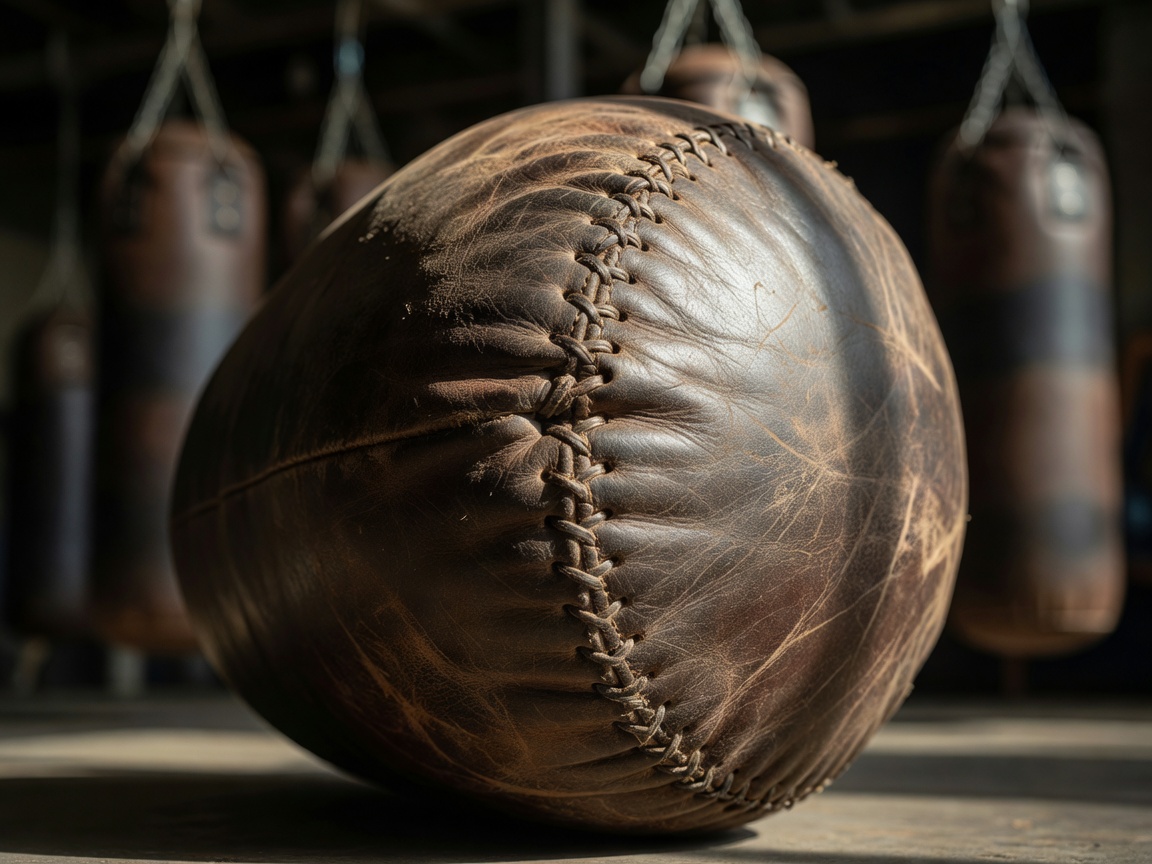
Different bags can encourage different training tasks, but their names do not prescribe a complete programme. A long bag, a smaller target and a double-end bag may offer useful variety when the coach has a clear progression. They also introduce different movements, fixings and failure points. Tensioned cords deserve particular attention because their routes can be difficult to notice in peripheral vision.
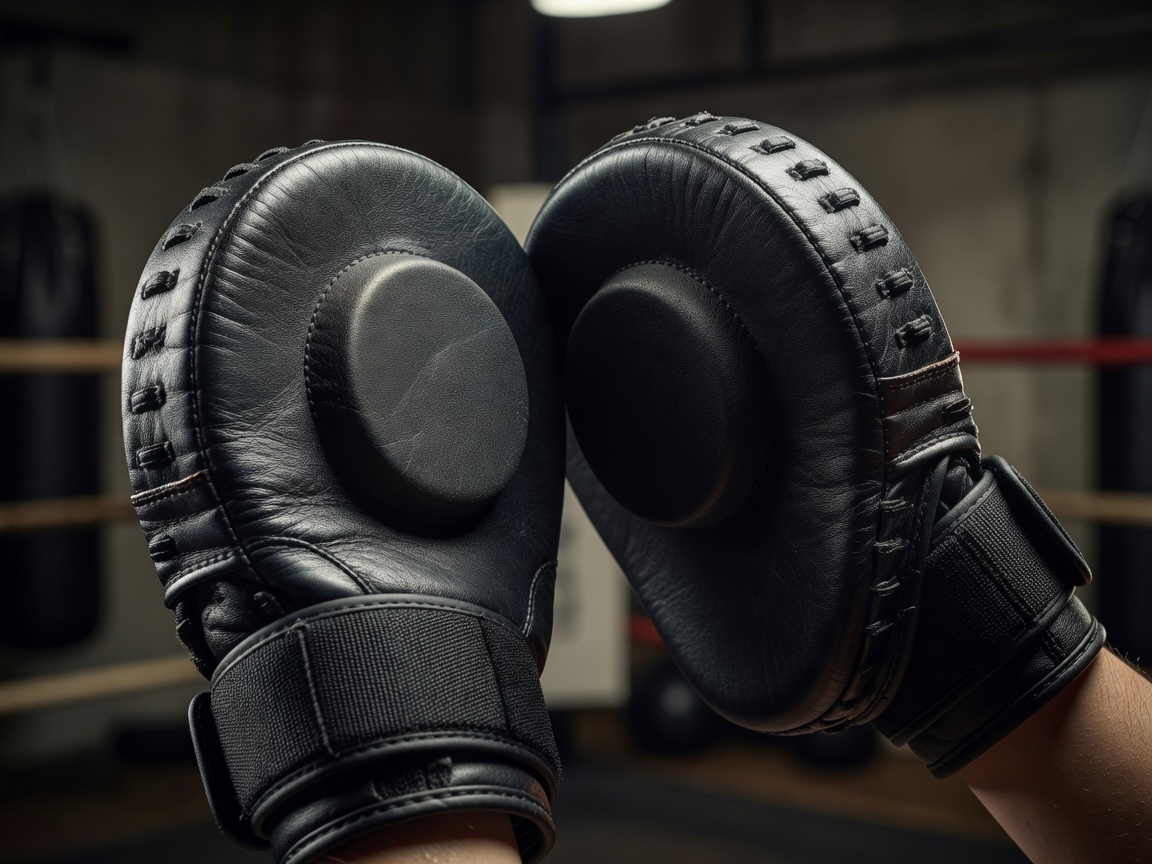
Focus mitts and body shields exchange fixed floor area for an active coaching relationship. They still need a defined zone. A pair moving through combinations should not drift into a neighbouring athlete’s skipping space. Agree boundaries and rotation directions before the round begins, especially where several groups share one open floor.
Consider noise as part of equipment selection. A rigid attachment can transmit impact into the building, and repeated bag strikes may disturb adjacent occupiers even when voices do not. Seek competent acoustic and structural advice where necessary. Do not assume a pad added to a bracket will solve vibration without affecting the fixing or its inspection.
Keep conditioning from crossing the room
Conditioning equipment should support the programme without consuming every spare route. Carried weights, medicine balls and resistance bands all have operating envelopes larger than their storage footprint. Position them so a dropped item or an extended band does not enter the ring approach or the main path to an exit.
Machines bring their own requirements: service access, a stable surface, moving parts and sometimes power or data. Ask for installation and maintenance documentation before committing to a purchase. Commercial use, cleaning products, replacement parts and warranty conditions matter more over time than a console full of features that nobody uses.
Footwork and skipping
Keep an uninterrupted surface and account for overhead and lateral rope movement. Do not make this the route to the equipment store.
Resistance and carried loads
Separate the lifting area from passing traffic, with stable storage and a visible return position for each item.
Recovery between rounds
Provide a place to pause and drink without blocking a doorway, equipment approach or supervised activity.
Design the reset, not just the session
Storage should be close enough to use and arranged so that returned items do not fall into circulation space. Avoid placing heavy objects above comfortable handling height. Racks need a suitable fixing and loading arrangement, and any locking or segregation should reflect who is allowed to use the equipment.
Shared gloves and pads need a realistic cleaning and drying routine. Follow material-specific instructions and allow the necessary time between users. Fragrance is not proof of hygiene, and shutting damp equipment in a crowded cupboard can undermine an otherwise careful routine. Consider individually assigned items where the operating model permits it.
Assign each station an identification label and record defects against it. When stitching opens, a cover tears or a suspension component changes condition, staff should know how to isolate the item and whom to tell. An “out of use” notice is not enough if the item remains available for the next person to pick up.
Review utilisation after several ordinary sessions. Equipment that repeatedly blocks movement or never enters the programme may need relocating or removing. The aim is not to maximise the number of objects in the room. It is to preserve a clear, maintainable setting in which coaches can teach and athletes can work.
Equipment is only one part of feedback
A clear station layout makes training easier to observe. Add measurement only when it answers a useful question.
Next: signals between rounds